
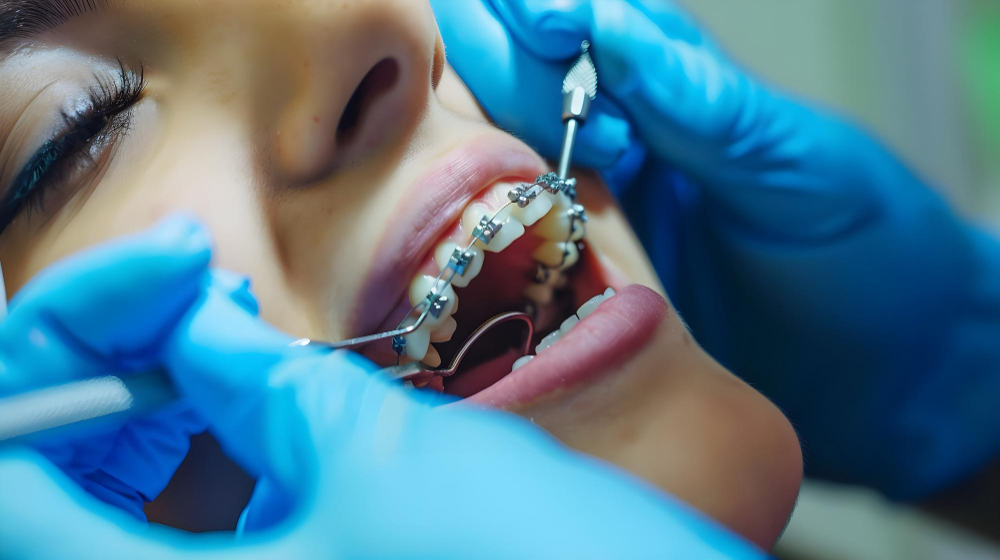
Introduction to Metal Braces
Many people wonder, “How do metal braces work?” Metal braces are a common way to straighten teeth. They help fix crowded, crooked, or uneven teeth. Dentists and orthodontists use them for both children and adults. Because they are strong and effective, metal braces remain a popular choice for orthodontic treatment.
How Metal Braces Work: Mechanism and Components
Metal braces use gentle, steady pressure to move teeth over time. But how do they do this? Let’s look at their main parts:
First, the arch wire is attached to the brackets. Then, as the wire tries to return to its original shape, it gently pulls or pushes the teeth. Over time, this pressure moves teeth into better positions. Because the process is slow and steady, it is safe and effective.
Step-by-Step Process of Getting Metal Braces
Getting metal braces involves several steps. Here’s what you can expect:
Because each person’s teeth are different, the process may vary slightly. However, these steps are common for most patients.
What to Expect During Treatment
After getting metal braces, you may feel some pressure or soreness. This is normal and usually goes away in a few days. As treatment continues, you will visit your orthodontist for regular check-ups. These visits help make sure your teeth are moving as planned. Sometimes, you may need extra parts like rubber bands to help with certain movements. Although braces may feel strange at first, most people get used to them quickly.
Benefits and Limitations of Metal Braces
Metal braces offer many advantages. However, they also have some drawbacks. Let’s look at both:
Because metal braces are so reliable, many people choose them despite these limits.
Care and Maintenance Tips for Metal Braces
Taking care of your braces is important. Good care helps prevent problems and keeps your treatment on track. Here are some tips:
Because braces can trap food, cleaning well is very important. This helps prevent cavities and gum problems.
Common FAQs About Metal Braces
Many people have questions about metal braces. Here are some common ones:
If you have more questions, your orthodontist can help.
Conclusion
In summary, metal braces are a trusted way to straighten teeth. They use gentle pressure to move teeth into better positions. With proper care, they can give you a healthy, beautiful smile.For more details or to see if metal braces are right for you, consult a qualified dentist or orthodontist at Sri Krishna Dental Clinic.